
Turning a temperature trend into proactive maintenance
For engineers responsible for critical rotating equipment, early detection of changing operating conditions can make the difference between a planned intervention and an unexpected failure.
A critical chiller unit was fitted with an @EL-WATCH wireless vibration and temperature sensor to provide continuous condition monitoring. The objective was to establish a clear operating baseline and identify changes in equipment behaviour early, giving the maintenance team an opportunity to investigate before a developing issue became a more serious reliability problem.
Detecting a change in operating condition
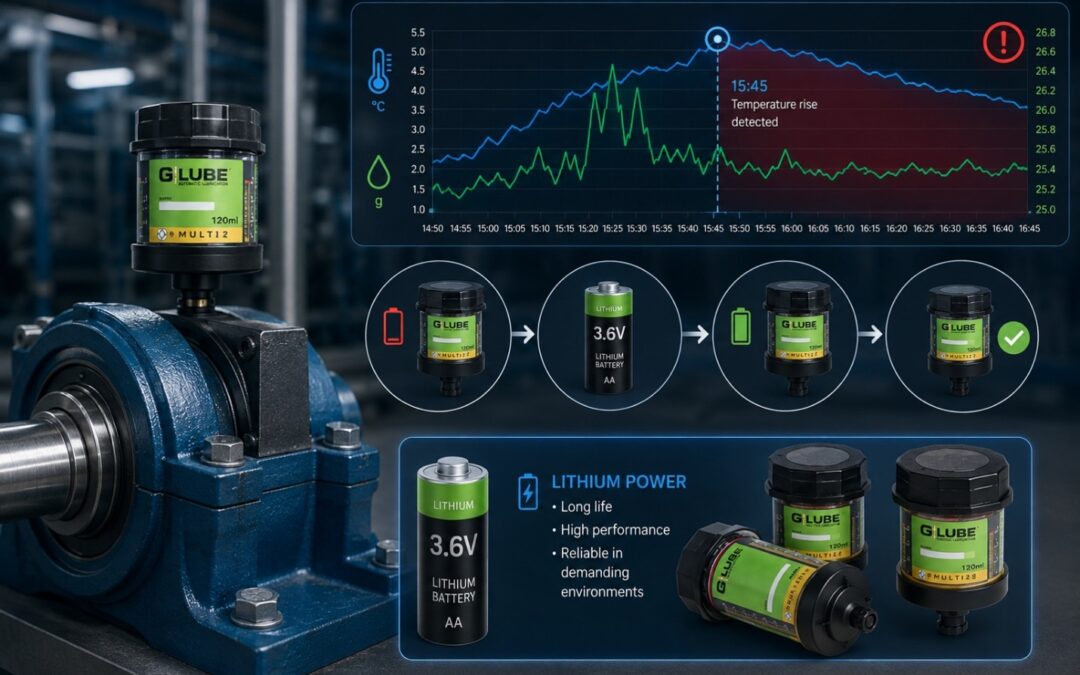
During routine monitoring, the EL-WATCH system identified a noticeable rise in the chiller’s temperature trend. Rather than waiting for a scheduled inspection or relying on a sudden alarm condition, the engineering team could see that the equipment was behaving differently from its established operating pattern.
The temperature increase prompted an investigation of the chiller and its associated lubrication system.
The inspection identified that the @Gruetzner automatic lubrication pot required a battery replacement. With the battery replaced, the lubrication system was restored to normal operation, ensuring the equipment could continue receiving the required lubrication.
Verifying the intervention
Following the maintenance intervention, the chiller remained under continuous EL-WATCH monitoring. Engineers were able to use the temperature trend to verify the effect of the corrective action rather than relying solely on a physical inspection.
The subsequent data showed the temperature returning to a more consistent operating condition, providing evidence that the intervention had addressed the underlying issue.
From condition monitoring to action
This case demonstrates the practical value of continuous condition monitoring for engineers. The sensor did not simply provide a temperature reading, it provided a trend that highlighted a change in machine behaviour, prompting investigation at the right time.
For maintenance teams, this approach can support more targeted inspections, earlier intervention and better understanding of asset condition.
The result: improved equipment visibility, proactive maintenance, reduced risk of overheating, and greater confidence that the chiller was operating reliably.